

Invisalign® straightens teeth with a series of clear, removable aligners, and in the right hands it can treat most of the cases braces can. I have been treating patients with clear aligners since 1999, and our practice published the first Invisalign case report in the Journal of the American Dental Association (JADA).1 Between Dr. Juliana Miller and me, Miller Orthodontics has completed more than 3,000 aligner cases.
These are the 10 questions patients ask us most often, answered the way we answer them in the exam chair.
1. What is Invisalign?
Invisalign is a brand of clear aligners: thin, custom-made plastic trays that move your teeth a small amount with each new set. You switch to the next aligner every week or two, and the series takes your teeth from where they are now to where your orthodontist has planned them to finish.
The plan itself is the important part. Every case starts with a 3D digital scan of your teeth, with no messy impressions, and the software shows a virtual before-and-after of your smile. At Miller Orthodontics, the doctors design and adjust every treatment plan themselves rather than leaving it to a technician. Small tooth-colored bumps called attachments are often bonded to some teeth so the aligners can grip and steer them.
Because we scan and 3D-print in-house, most patients can get their first aligner the next day.
2. How much does Invisalign cost?
At Miller Orthodontics, orthodontic treatment ranges from about $500 to $7,500, depending on what your teeth need. A minor touch-up of a few front teeth is at the low end. A full comprehensive Invisalign case can reach $7,000 or more, though most cases cost less.
Your fee covers the consultation, records, diagnosis, treatment plan, all visits and your first set of retainers. We make it manageable:
- 0% interest in-house financing: most patients pay 10–20% down and the rest monthly over 1–2 years
- 5% off when you pay in full
- Family discounts when more than one family member is in treatment
- Insurance help: our insurance specialist helps you get the most from your benefits (orthodontic coverage is usually a lifetime maximum of $1,500–2,000)
For the full breakdown, read How Much Do Braces Cost in Park City and Heber City?
3. Why are there so many different aligner options?
There are many options because aligners are now made by several companies, and Invisalign itself comes in packages sized to how much movement your case needs. Invisalign offers comprehensive treatment for full cases, shorter packages for minor corrections, and versions for teens and younger children. Other brands make their own aligners, and some offices, like ours, can print aligners in-house. We can now do that with Invisalign, too.
The brand matters less than who designs the plan. Every aligner is just plastic shaped by software; the result depends on the doctor deciding where each tooth should go and when. We have completed more than 3,000 aligner cases across several systems, and we choose the one that fits your teeth, your goals and your budget. For more on this, see How to Choose an Aligner Provider.
4. How many hours a day do I need to wear my aligners?
Wear your aligners 20 to 22 hours a day, taking them out only to eat, drink anything other than water, and brush. Aligners only move teeth while they are in your mouth. A few short days usually add up to a longer treatment, and aligners that stop fitting may need to be remade.
We often use remote dental monitoring, so we can check your progress from scans you take on your phone between visits. That means we catch an aligner that isn’t tracking early, instead of finding out at your next appointment. You will still see an orthodontist in person every 6 to 10 weeks.
5. What can and can’t I eat with aligners?
You can eat anything you like, because you take your aligners out to eat. That is one of the biggest advantages over braces, where hard, sticky and chewy foods are off limits.
The rules are about what goes on while your aligners are in:
- Water only with aligners in. Coffee, tea, wine and soda can stain the aligners, and sugary or acidic drinks get trapped against your teeth.
- No eating with aligners in. Food can crack them and gets trapped against your teeth.
- Brush, or at least rinse, before putting aligners back in.
- Keep the case with you. Most lost aligners are wrapped in a napkin at a restaurant and thrown away.
6. Who should I see for aligners: an orthodontist, a general dentist or a mail-order company?
See an orthodontist if you want the best chance of a good result, especially if your bite is off and not just your front teeth. Orthodontists complete two to three years of specialty training after dental school, and moving teeth and jaws is all we do.
| Question | Orthodontist | General dentist | Mail order |
|---|---|---|---|
| Specialty training in tooth movement | 2–3 years after dental school | Short courses | None for the patient to see |
| Exam and x-rays before treatment | Yes | Usually | Often no in-person exam |
| Who designs the plan | The orthodontist | Often the aligner company’s technician | A remote reviewer |
| Fixes the bite, not just the front teeth | Yes | Sometimes, but less skilled | Rarely |
| Help if treatment goes off track | In person | In person | Limited |
General dentists can do fine work on simple cases. Mail-order aligners skip the exam and x-rays that catch gum disease, cavities or bite problems before teeth start moving, and the largest mail-order aligner company shut down in 2023, leaving many patients mid-treatment.
At Miller Orthodontics, an orthodontist sees you at every visit and designs your plan personally.
7. What kinds of cases are well suited for Invisalign?
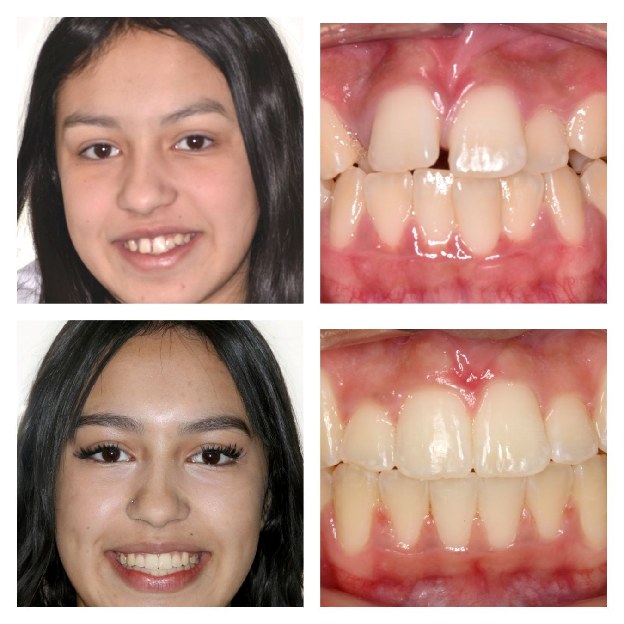
Invisalign works well for most crowding, spacing and mild to moderate bite problems in teens and adults. Cases we treat routinely with aligners include:
- Crowded or crooked teeth
- Gaps between teeth
- Mild to moderate overbites and underbites
- Crossbites and open bites (due to new aligner technology)
- Relapse after earlier braces
- Straightening teeth before dental implants, crowns or veneers
Some cases do better with another approach. Growing children with severe overbites often benefit from a bite corrector such as the Crossbow first, which we have published research on, followed by braces or Invisalign. Patients who won’t wear aligners consistently do better with fixed options such as Lightforce braces or InSmile lingual braces, which are hidden behind the teeth.
8. How does the discomfort compare with braces?
Most patients find aligners more comfortable than braces, with pressure rather than pain. Each new aligner feels snug for a day or two while your teeth start to move, then eases off. Switching aligners at bedtime lets you sleep through the tightest part.
Braces tend to cause more soreness after each adjustment, and brackets and wires can rub the cheeks and lips until they toughen up. Aligners have smooth edges and no wires. Over-the-counter pain relievers and soft foods for the first day handle almost any aligner discomfort.
The trade-off is comfort (aligners) versus being compliance-free (braces). Our doctors will guide you through that decision and help you choose the option that best fits your lifestyle. For a closer comparison, see Braces vs. Invisalign.
9. Will aligners affect my speech?
You may notice a slight lisp for the first few days. Most people sound normal within one to two weeks, and younger patients often adjust even faster. Your tongue simply needs time to adjust to the thin layer of plastic over your teeth.
The fastest way through it is to talk: read aloud, sing in the car and keep your aligners in. Patients who take their aligners out to speak take longer to adapt, and they lose wear time too.
10. What type of retainer is best after Invisalign?
For most Invisalign patients, we prefer Vivera clear retainers. They are made by the same company as Invisalign, are thicker and more durable than an ordinary aligner, and look just like what you’ve been wearing. Teeth always try to drift back, so retainers are for life, and we offer a lifetime retention program through Invisalign/Vivera.
Our retention plan is simple:
- Wear your retainers about 20 hours a day for the first 2 months.
- Then wear them every night, for life. Yes, for life, or as long as you want your teeth to stay straight.
For teeth that started out badly rotated, we may add a bonded wire retainer (Memotain) behind the front teeth. Your first set of retainers is included in your fee. We keep your 3D-printed models on file, so a lost or broken retainer can be remade quickly, often the same day.
Bonus: Is Invisalign a good choice for teens and preteens?
Yes, Invisalign Teen works very well for teens who will wear their aligners, and it is one of the most popular treatments among top Invisalign providers. For growing preteens who need the jaw corrected and not just the teeth straightened, we usually start with a fixed appliance and use aligners afterward.
Invisalign now makes a palatal expander and a Class II “bite-jumping” option (mandibular advancement) for growing patients. Both work for patients who wear them faithfully, and we offer them. For most growing patients, though, we prefer compliance-free appliances that stay in place:
- Narrow upper jaw: a 3D-printed metal or banded palatal expander, fixed to the back teeth
- Overbite from a short lower jaw (Class II): the Crossbow, a fixed bite corrector we have published research on. In our experience it corrects the bite faster than the Invisalign bite-jumping option.
The reason is simple: fixed appliances work 24 hours a day, including while your child is eating. Aligner-based appliances come out for every meal and snack, and they only work when they are in. Once the jaw is corrected, we finish with Invisalign Teen or braces.
We recommend an orthodontic check around age 7, so we can catch crossbites and crowding early and time growth correction to when it works best. See Early Treatment.
Get an Invisalign consultation in Park City or Heber City
The only way to know whether Invisalign is right for you is a consultation with an orthodontist. Miller Orthodontics has two full-time offices, at Kimball Junction in Park City and on Main Street in Heber City, and we were voted Park City’s Best Orthodontist the last 5 years in The Park Record’s readers’ poll (see our awards).
Schedule your consultation at either office.
Sources
- Chenin DA, Trosien AH, Fong PF, Miller RA, Lee RS. Orthodontic treatment with a series of removable appliances. J Am Dent Assoc. 2003;134(9):1232-1239.