

The short answer: Orthodontic treatment can be part of the plan for some patients with sleep-disordered breathing. But an orthodontist can’t diagnose sleep apnea, expanders and braces haven’t been shown to prevent it, and orthodontics alone isn’t a cure. That’s the position of the American Association of Orthodontists in its 2026 updated guidance.1 The right path starts with a physician and a sleep study.
“Airway” is one of the hottest topics in dentistry right now. Parents see videos promising that expanding a child’s palate will fix snoring, sleep, behavior and even future sleep apnea. Some of that is hopeful science. Much of it has run ahead of the evidence.
A trusted colleague, Dr. Luke Shapiro, recently interviewed his mentor, Dr. Salzer, who told the story of treating her own son’s airway for 10 years. He had expansion, a removable growth appliance, and his tonsils and adenoids removed. His teeth looked great. But in college he still couldn’t stay awake, and a sleep study found a heart rhythm problem that needed a cardiologist, not an orthodontist. Her lesson: “Expansion doesn’t cure everything.”
Here’s what the research actually shows, and how we approach it.
1. What is an “airway orthodontist”?
It’s a marketing term, not a specialty. Orthodontics and dentofacial orthopedics is one of the 12 dental specialties recognized by the American Dental Association’s National Commission; “airway” and “sleep” are not on that list.2 Any orthodontist can screen for breathing problems, and many take continuing education in dental sleep medicine. But no extra title makes an orthodontist qualified to diagnose sleep apnea, because in the U.S. that’s a physician’s job.1
2. What is sleep-disordered breathing?
Sleep-disordered breathing (SDB) is a range of problems, from habitual snoring at one end to obstructive sleep apnea (OSA) at the other, where the airway repeatedly narrows or closes during sleep.1 In children, untreated SDB can affect sleep, behavior, growth and learning, which is why it’s worth taking seriously.13
Two facts surprise most parents:
- Many children outgrow it. Mild SDB in young children often improves on its own by the teen years, although boys and children who are overweight are less likely to outgrow it.1
- Anatomy is only part of the story. Airway collapse during sleep also depends on muscle tone, how the brain controls breathing, and how easily someone wakes. That’s why two people with the same jaw shape can sleep very differently.1
3. Who can diagnose sleep apnea?
Only a physician, usually with an overnight sleep study (polysomnography), which is the gold standard.13 The AAO is direct about this: no sleep-related orthodontic treatment should start before a physician’s diagnosis.1 The American Dental Association likewise describes the dentist’s role as screening and referring, and providing oral appliances only when a physician prescribes them.4
Signs worth mentioning to your pediatrician: regular snoring, gasping or pauses in breathing, restless sleep, mouth breathing, bedwetting after it had stopped, daytime sleepiness, or trouble with attention or behavior.3
4. Can palatal expansion cure sleep apnea?
Not on its own, according to the best current evidence.
- A 2023 network meta-analysis found that palatal expansion alone did not significantly reduce the apnea-hypopnea index (AHI, the main sleep-study score) compared with controls. The biggest improvement came from expansion combined with tonsil and adenoid removal.15
- A 2024 randomized trial found that removing tonsils and adenoids reduced AHI more than expansion did.1
- Earlier reviews of small studies reported large drops in AHI after expansion, but most of those studies had no control group, and only about 1 in 4 children was actually cured.6
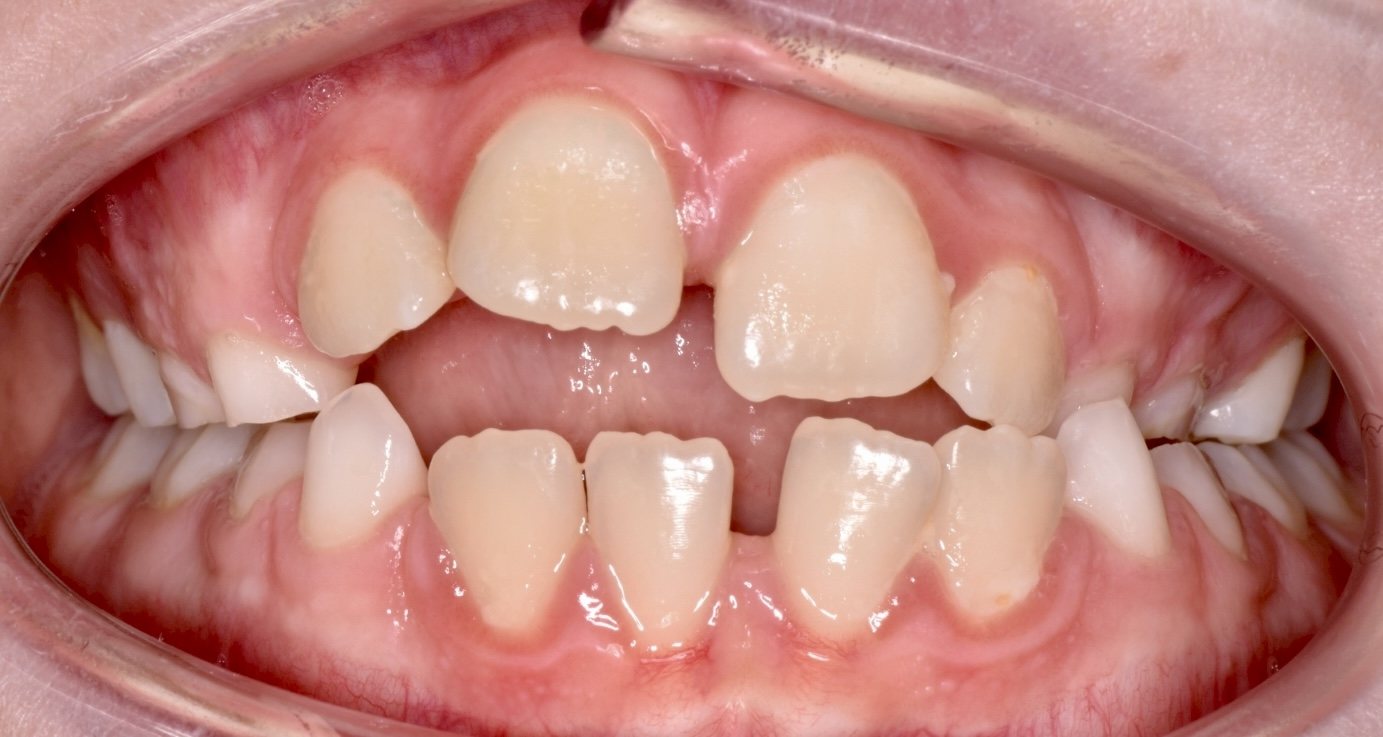
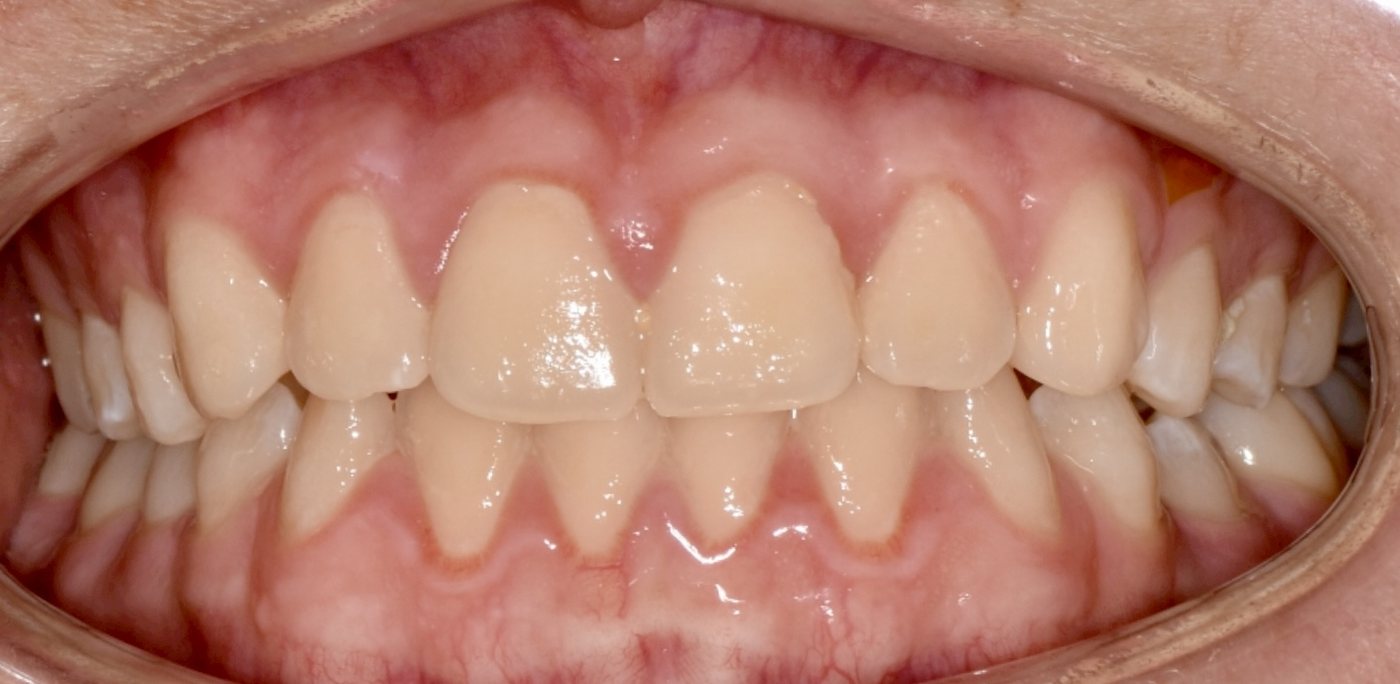
In my experience, expanding a narrow upper jaw in children about 7 to 11 years old, while also screening for an airway obstruction, helps. But it isn’t a cure. For adults with a narrow upper jaw, miniscrew-assisted expansion (MARPE or MASPE) is an option we sometimes use, although its effect on breathing during sleep hasn’t been well studied yet.1
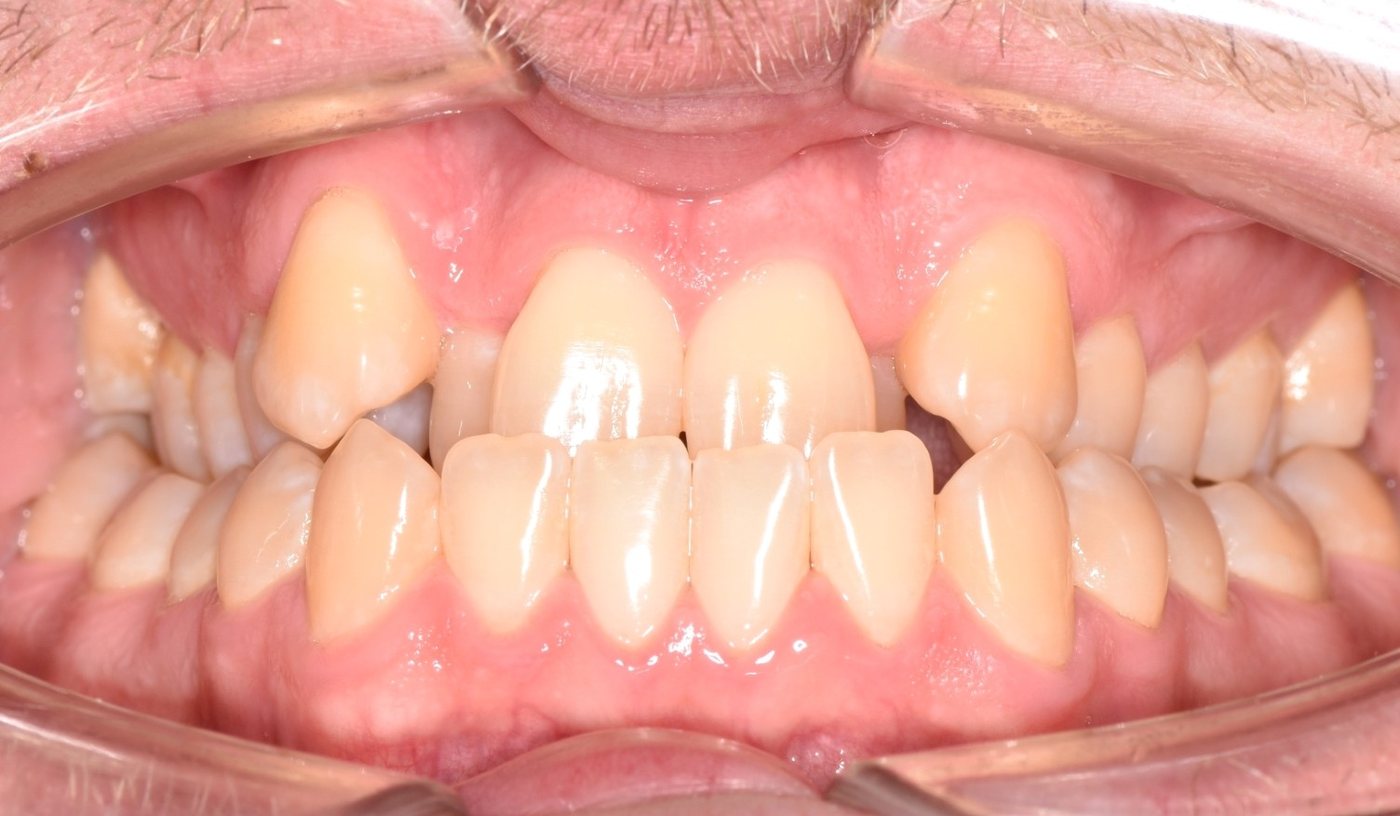
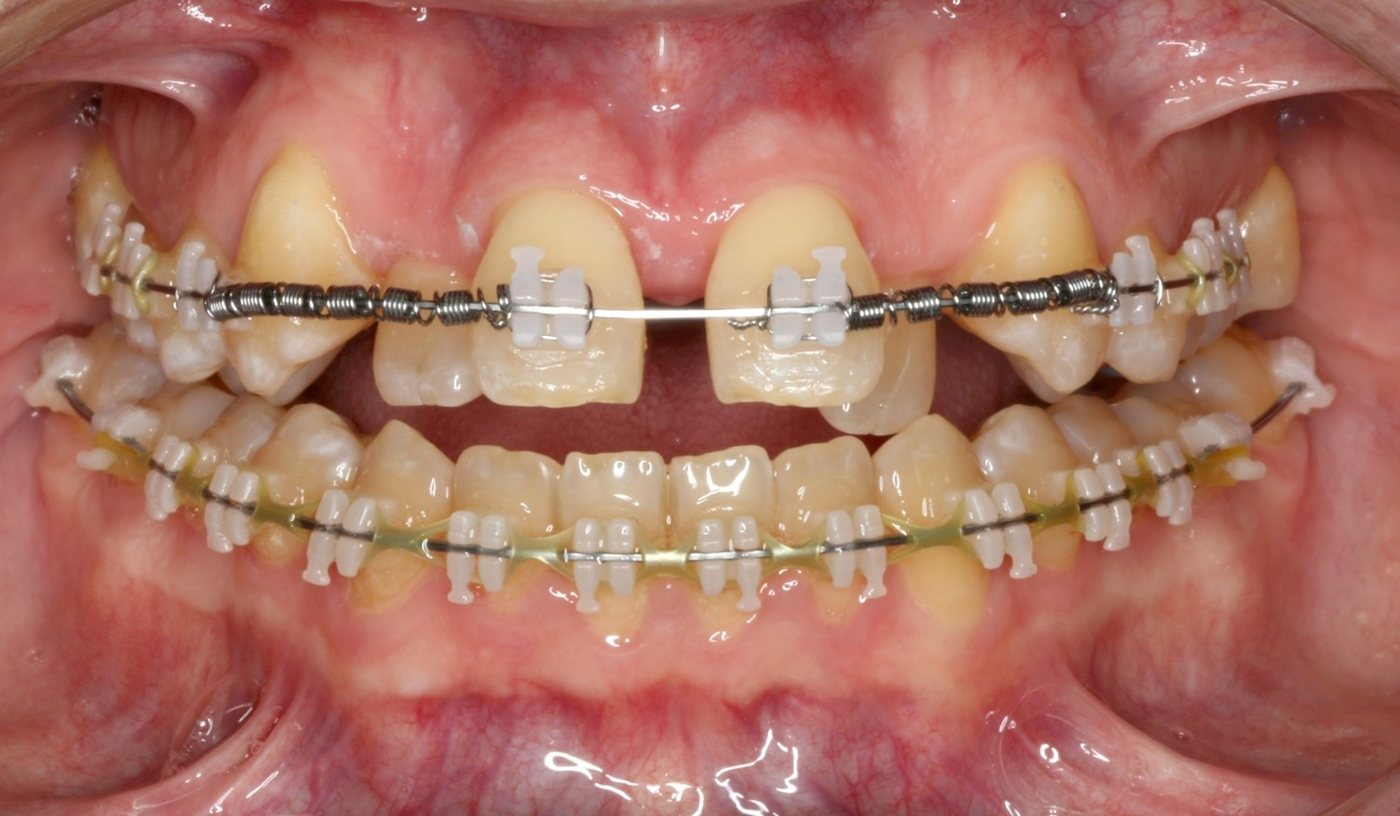
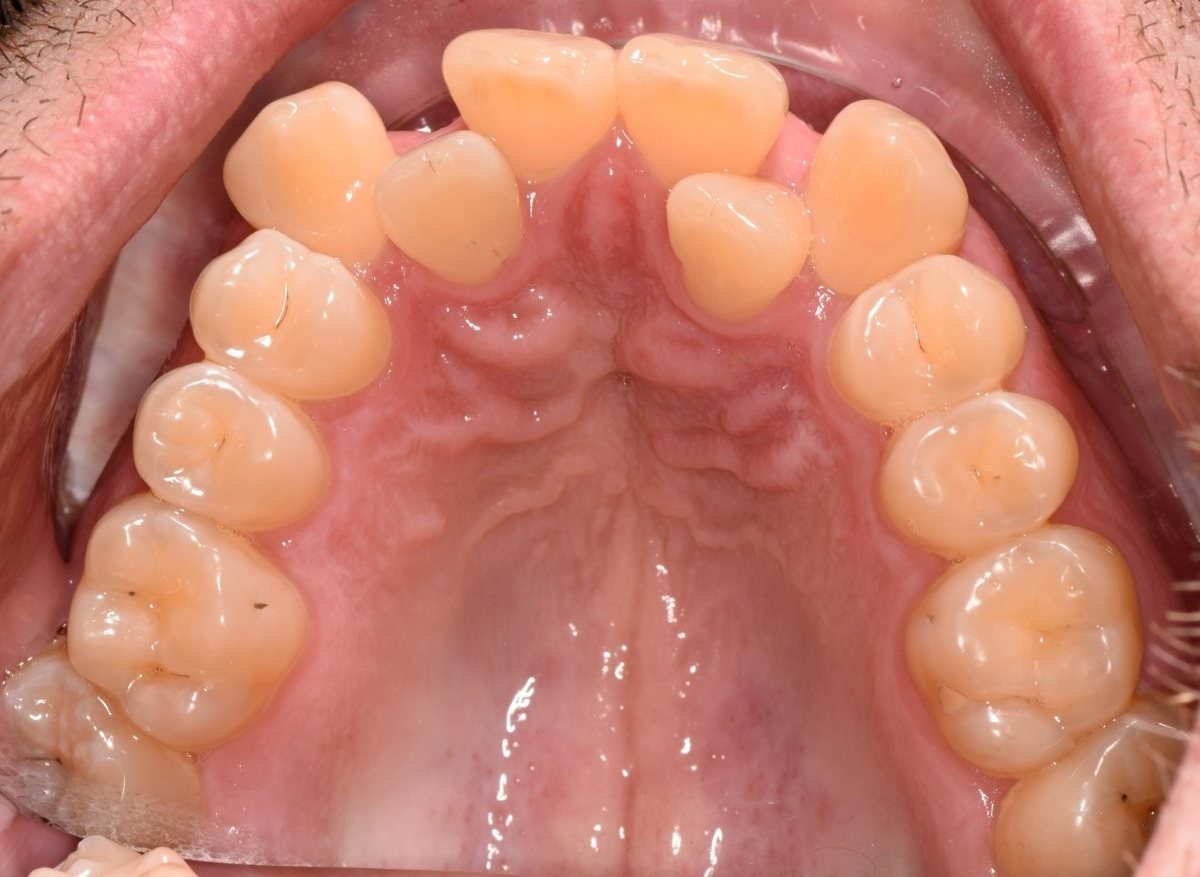
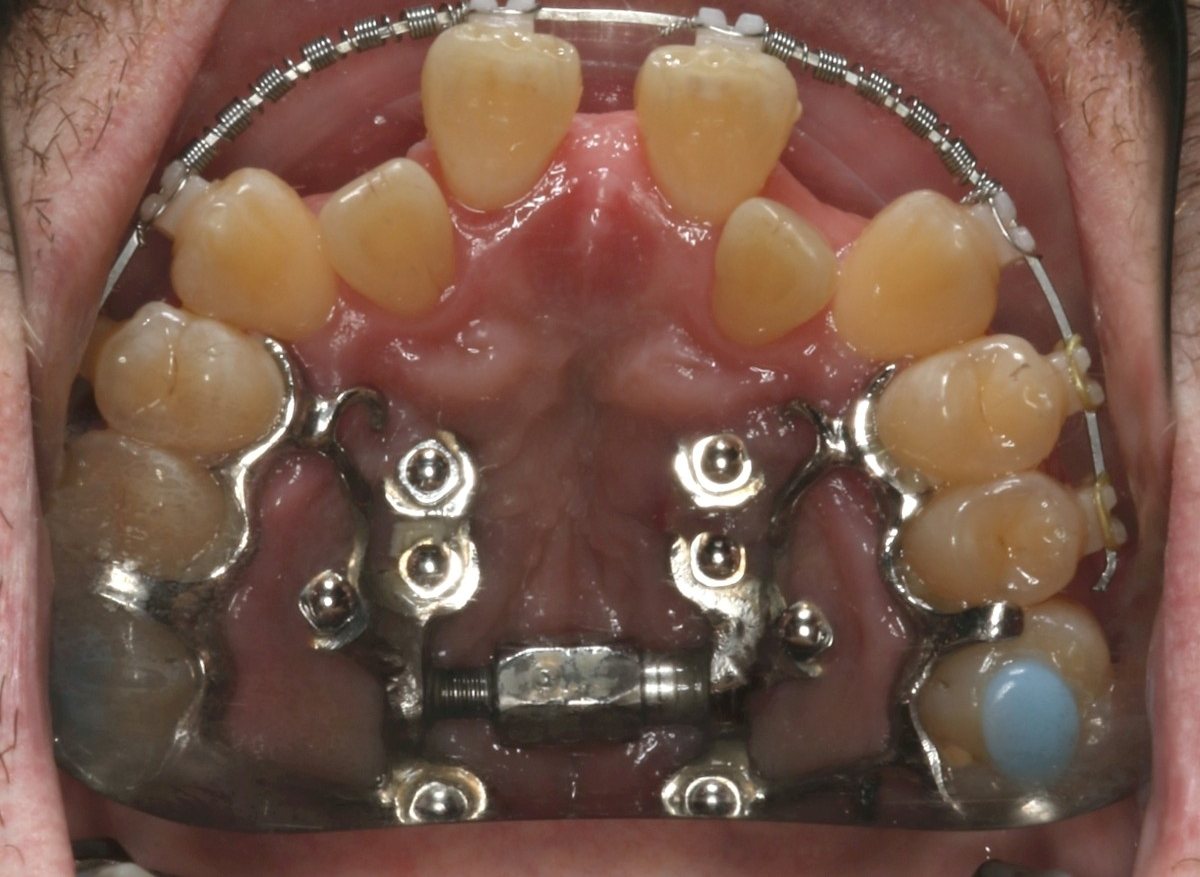
The AAO recommends using expansion for sleep-disordered breathing only when there’s both a real orthodontic reason and a confirmed diagnosis from a physician.1 There is no one appliance that solves this problem.
5. Can orthodontic treatment prevent sleep apnea?
There’s no evidence that it can. The AAO’s 2026 update says no orthodontic treatment, including expansion or growth-guiding (functional) appliances, has been shown to prevent sleep-disordered breathing, and there’s no evidence for expanding a child’s palate “just in case.”1 A Cochrane review reached a similar conclusion for oral and functional appliances in children: too little good evidence to say they work for sleep apnea.7 The American Dental Association’s 2017 policy suggested that early orthodontic treatment might help prevent breathing problems in children,4 but the AAO’s more recent review of the evidence found no support for that.1
6. Can braces or extractions cause sleep apnea?
No. Worried parents sometimes hear that removing teeth for braces, or moving teeth back, “shrinks the airway.” The AAO’s review found no evidence that extractions or distalizing teeth cause or increase the risk of sleep-disordered breathing.1 Extractions remain a sound option when crowding or protrusion calls for them.
7. Can a 3D scan or x-ray show that my child’s airway is too small?
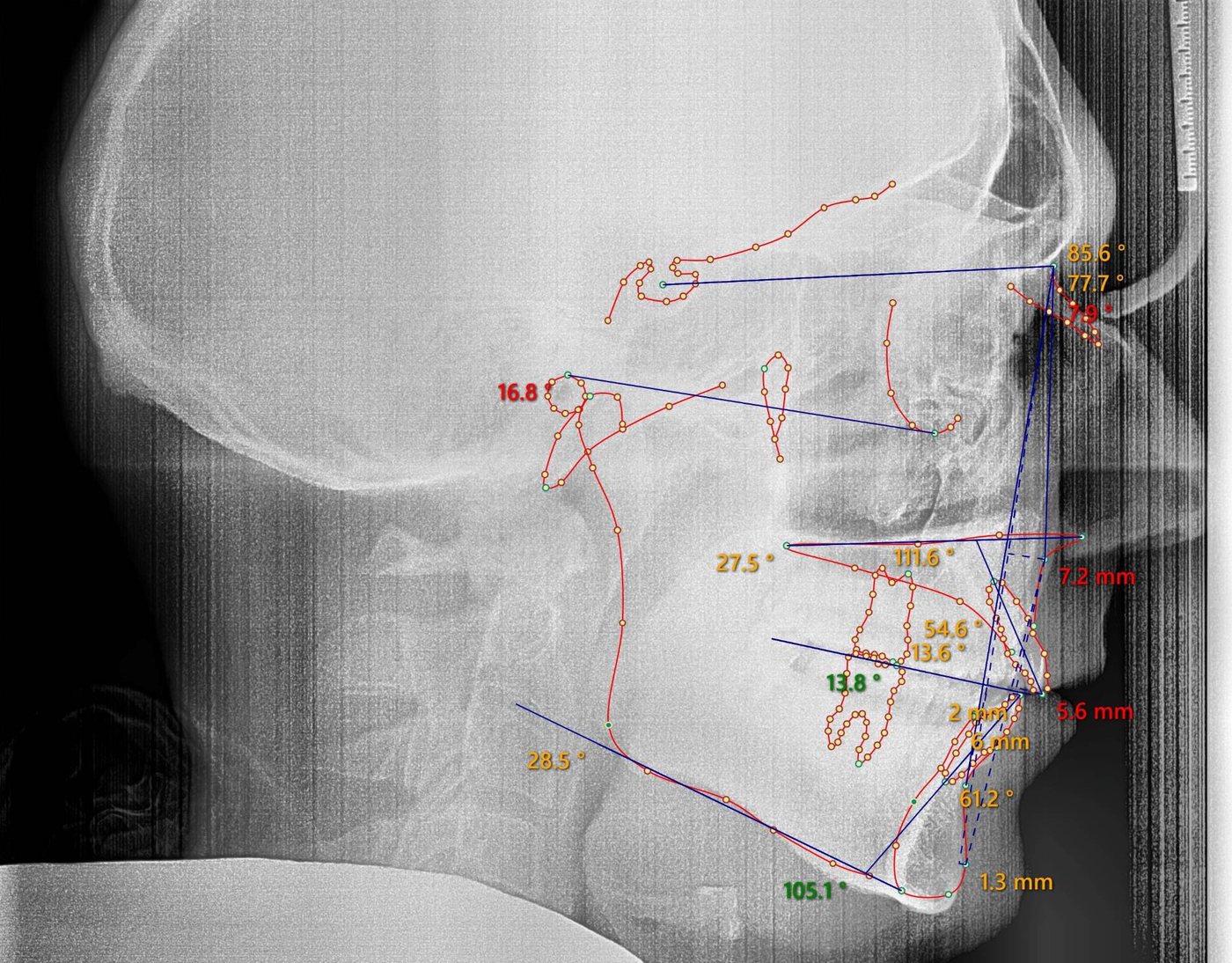
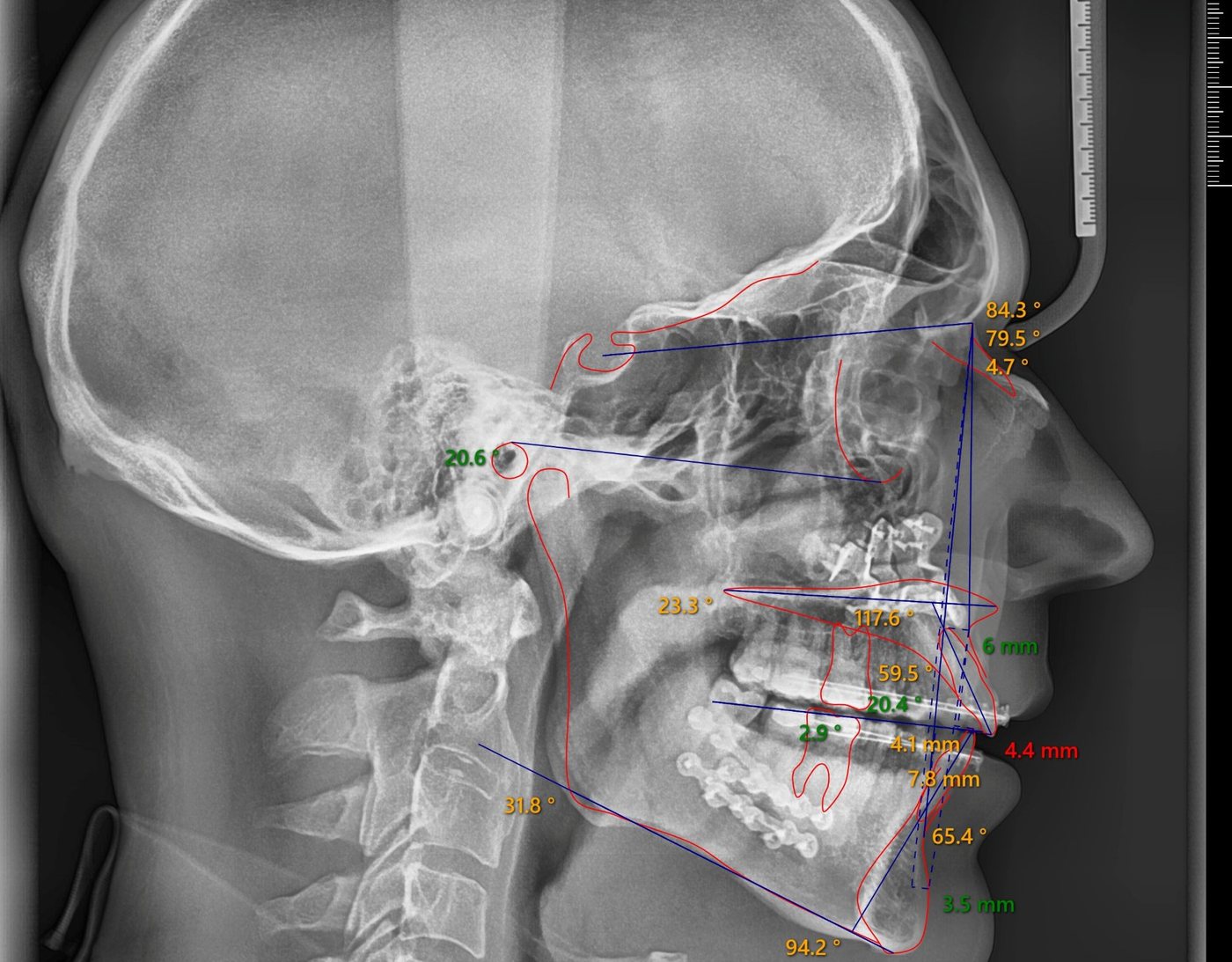
No. This is one of the biggest changes in the 2026 AAO update. Airway measurements from CBCT 3D scans or cephalometric x-rays are not suitable for diagnosing sleep-disordered breathing, judging risk, or proving that a treatment worked.1
I think of the airway as a wet paper straw. It’s soft and dynamic, and it changes with the forces around it, with gravity, and when you lie down. A scan is taken while you’re awake and sitting up, but sleep apnea happens lying down, asleep, with relaxed muscles. A bigger airway on a scan doesn’t mean better breathing during sleep.1
We do have a CBCT in our office. We use it for screening and for what it does well, such as seeing roots, impacted teeth and the jaws, never to diagnose sleep apnea.
8. Will tongue-tie surgery help my child breathe or sleep better?
For sleep apnea, the evidence says no. The American Academy of Otolaryngology concluded in 2020 that tongue-tie does not cause sleep apnea, and warned that some releases could make it worse. The American Academy of Pediatrics says frenectomies to prevent sleep apnea or speech problems aren’t evidence-based.1 Tongue-tie release can help some babies with breastfeeding, which is a different question.
9. What treatments actually help?
For children, the treatment depends on the cause, and a physician decides:
- Removing enlarged tonsils and adenoids is the first-line treatment for most children with sleep apnea and big tonsils.3
- For mild cases, a large 2023 trial compared surgery with watchful waiting in children who snore. Surgery improved behavior, symptoms, quality of life and blood pressure, but not attention or executive-function scores at 12 months.8 So even surgery isn’t a guaranteed fix, and some families reasonably choose to watch and wait.
- Other options include CPAP and, for mild cases, nasal steroid sprays.3
- Orthodontics can help as part of the team plan when the child also has a bite problem, such as a narrow upper jaw, coordinated with the physician.1
For adults:
- CPAP is the most effective non-surgical treatment.9
- Removable sleep appliances that hold the lower jaw forward help some adults, and sleep physicians prescribe them for patients who can’t tolerate CPAP.9 We don’t make them in our office, because over time they can move teeth and shift the bite, sometimes into an underbite (Class III). I’ve treated patients whose bites changed this way.1 If your sleep physician recommends one, ask how your bite will be monitored.
- Jaw advancement surgery (moving both jaws forward, called maxillomandibular or bimaxillary advancement) benefits many adults with severe sleep apnea. It’s major surgery, but in a pooled analysis of 45 studies, about 86% of patients had a successful result, although fewer than half were completely cured.10 A 2025 review by Dr. Michael Gunson, an oral and maxillofacial surgeon and orthodontist who practices with Dr. William Arnett in Santa Barbara, reached the same conclusion: expansion and jaw surgery can significantly reduce apneas, but they don’t consistently cure them, especially when obesity or weak muscle tone is involved.12 We have treated many patients for this, working alongside oral surgeons and sleep physicians.
- Myofunctional therapy (tongue and throat exercises) has shown promise as an add-on, but the studies so far are small.11
10. What do we do at Miller Orthodontics?
Early in my career, in the late 1980s and early 1990s, an ENT physician taught me how to screen for enlarged tonsils and adenoids and how to evaluate tongue posture and swallowing patterns. That training still shapes how we work:
- We screen. At your exam we look for enlarged tonsils and adenoids, both on the cephalometric x-ray and by looking in the mouth, and we evaluate tongue posture and swallowing. We also ask about snoring, sleep, mouth breathing and daytime tiredness.
- We refer. If we see warning signs, we refer to your pediatrician, an ENT, or a sleep physician for a proper diagnosis before any sleep-related treatment.
- We treat what’s orthodontic. If your child has a narrow upper jaw, a crossbite, or a jaw that needs growth guidance, we treat it because the bite needs it, and we coordinate with your child’s physician when breathing is part of the picture. For adults with severe sleep apnea, we prepare the bite for jaw advancement surgery with the surgical team.
- We don’t overpromise. We’ll never tell you an expander will cure sleep apnea, attention problems or bedwetting.
Sleep apnea is very complex, and dentists and orthodontists are not the be-all and end-all solution. An interdisciplinary team is the best approach.
At a glance: what the evidence says
| Claim | What the evidence shows |
|---|---|
| “An orthodontist can diagnose sleep apnea.” | No. Only a physician can, usually with a sleep study1 |
| “Expanders prevent sleep apnea later in life.” | No evidence1 |
| “Expansion cures sleep apnea.” | Not alone; the best results come when it’s combined with tonsil and adenoid care15 |
| “Extractions or braces cause sleep apnea.” | No evidence1 |
| “A CBCT can measure whether the airway is too small.” | Not valid for diagnosis or for judging results1 |
| “Tongue-tie release prevents sleep apnea.” | Not evidence-based1 |
| “Oral sleep appliances help adults.” | They help some adults, but they can shift the bite over time19 |
| “Kids who snore always need treatment.” | Not always; many outgrow mild cases, and a physician helps decide18 |
Questions to ask before any “airway” treatment
- Has a physician diagnosed my child with a sleep-breathing problem, with a sleep study?
- Is this expander or appliance recommended because of a bite problem, or only for “airway”?
- How will we know if it worked? (A sleep study, not just a scan.)
- Who else is on the team: pediatrician, ENT, sleep physician?
- Is anyone promising this will fix attention, behavior or bedwetting?
The bottom line
Breathing and sleep matter enormously, and orthodontists are well placed to notice the warning signs. But the honest answer is that orthodontic treatment is one tool on a medical team, not a cure on its own. The best outcomes come when your orthodontist, pediatrician, ENT and sleep physician work together, and when treatment is based on a real diagnosis.
If you’re worried about your child’s snoring or sleep, start with your pediatrician. If your child also has a bite or jaw-growth concern, schedule an exam at our Park City or Heber City office, and we’ll help coordinate the right care. For more on choosing between appliances, see the 3 main types of orthodontic treatment.
Sources
- Palomo JM, Cohen-Levy J, Flores-Mir C, et al. Sleep-disordered breathing and orthodontics: An American Association of Orthodontists white paper update. Am J Orthod Dentofacial Orthop. 2026;169(4):419-427. Read the paper
- ADA National Commission on Recognition of Dental Specialties and Certifying Boards. Recognized dental specialties
- Marcus CL, Brooks LJ, Draper KA, et al. Diagnosis and management of childhood obstructive sleep apnea syndrome. Pediatrics. 2012;130(3):576-584. PubMed
- American Dental Association. The Role of Dentistry in the Treatment of Sleep Related Breathing Disorders Adopted by the ADA House of Delegates, 2017. ADA policy (PDF)
- Yu M, Ma Y, Xu Y, et al. Orthodontic appliances for the treatment of pediatric obstructive sleep apnea: a systematic review and network meta-analysis. Sleep Med Rev. 2023;72:101855.
- Camacho M, Chang ET, Song SA, et al. Rapid maxillary expansion for pediatric obstructive sleep apnea: a systematic review and meta-analysis. Laryngoscope. 2017;127(7):1712-1719. Read the abstract
- Carvalho FR, Lentini-Oliveira DA, Prado LBF, et al. Oral appliances and functional orthopaedic appliances for obstructive sleep apnoea in children. Cochrane Database Syst Rev. 2016. Cochrane Library
- Redline S, Cook K, Chervin RD, et al. Adenotonsillectomy for snoring and mild sleep apnea in children: a randomized clinical trial. JAMA. 2023;330(21):2084-2095. JAMA
- Ramar K, Dort LC, Katz SG, et al. Clinical practice guideline for the treatment of obstructive sleep apnea and snoring with oral appliance therapy: an update for 2015. J Clin Sleep Med. 2015;11(7):773-827. Full text
- Zaghi S, Holty JE, Certal V, et al. Maxillomandibular advancement for treatment of obstructive sleep apnea: a meta-analysis. JAMA Otolaryngol Head Neck Surg. 2016;142(1):58-66. JAMA Otolaryngology
- Camacho M, Certal V, Abdullatif J, et al. Myofunctional therapy to treat obstructive sleep apnea: a systematic review and meta-analysis. Sleep. 2015;38(5):669-675. Full text
- Gunson MJ. The efficacy of facial skeletal treatment options in the management of obstructive sleep apnea. J Prosthodont. 2025;34(S1):41-45. Read the abstract