

It’s one of the first questions every patient and parent asks. The honest answer: most comprehensive braces treatment takes 1 to 2 years. Where you land in that range depends on your bite, your growth, the treatment you choose, and how well your braces are cared for along the way.
This guide is written by Drs. Bob and Juliana Miller of Miller Orthodontics in Park City and Heber Valley. We use three digital treatment methods (Lightforce custom braces, InSmile hidden braces and Invisalign), and we design our digital treatment plans ourselves. Below, we answer the 10 questions we hear most about treatment time, using our own experience and what the published research shows.
1. How long do braces usually take?
For most comprehensive cases at Miller Orthodontics, treatment takes 1 to 2 years. The shortest comprehensive teen case we’ve finished took 10 months, using one of our digitally designed treatments. The longest teen cases run about 3 years, usually because a tooth was impacted (stuck in the bone) or slow to come in.
That lines up with the research. A 2016 systematic review of 22 studies and more than 1,000 patients found that comprehensive braces treatment averages about 20 months (19.9), with about 18 visits along the way.1
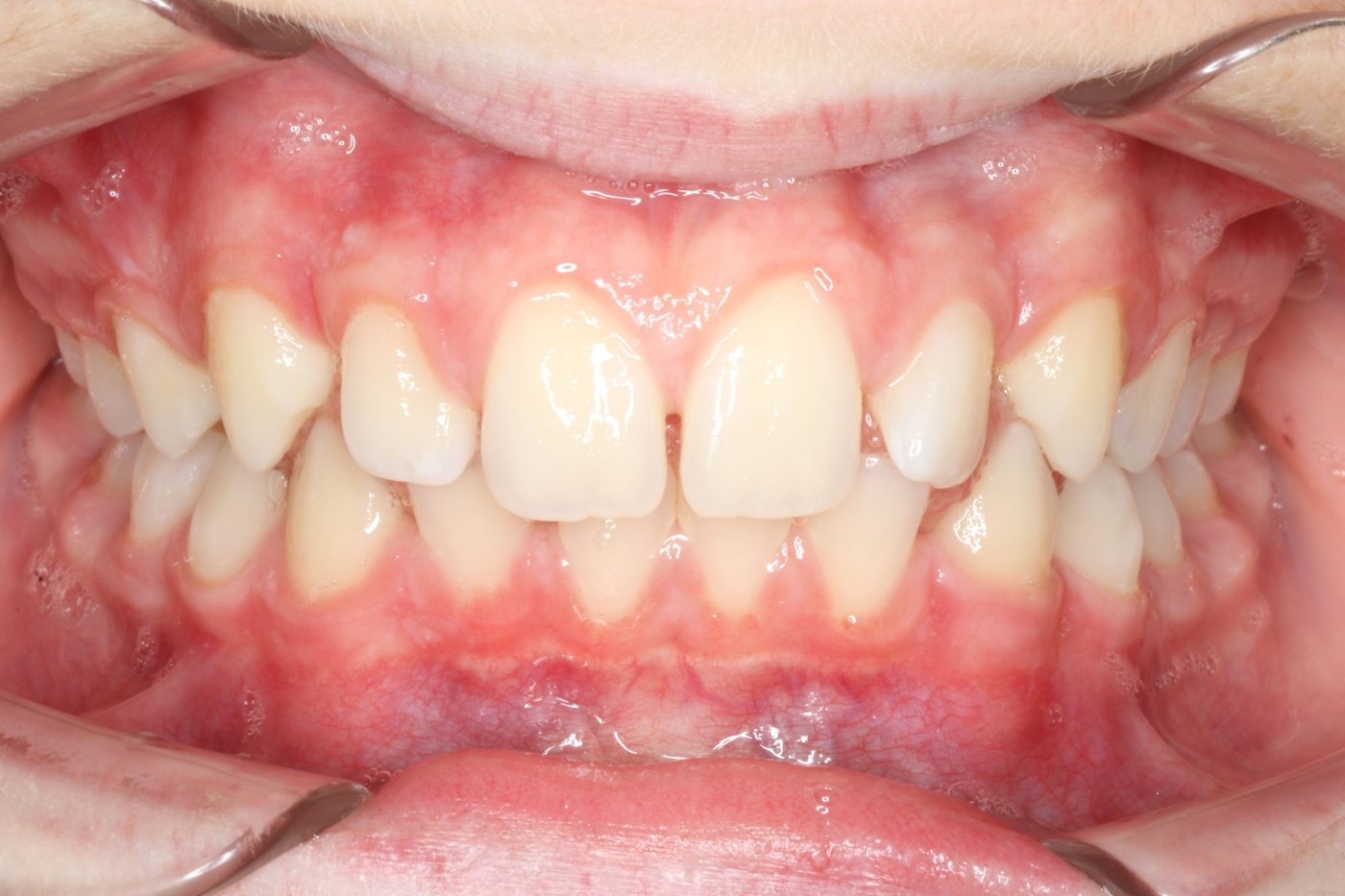
2. Do adults take longer than teens?
Not usually. In our practice, adult treatment times are roughly the same as teens’. In a 2021 study that followed patients forward through treatment, age had no link to how long treatment took.2
What’s often different for adults is the goal. Many adults don’t need, or don’t want, a full bite correction. For example, an adult with an overbite may not want jaw surgery but is bothered by one rotated front tooth that shows in the smile. In cases like that, we sometimes straighten just the teeth that affect the smile and hold them with a permanent retainer. A focused plan like this is often shorter.
3. How do you estimate my treatment time?
At your first visit we give you a range, not a single date. The range depends on:
- Your age and how much growth is left
- The treatment you choose and our experience with it
- Things we can’t control: broken brackets, missed wear or appointments, and teeth that are slow to come in
In our experience, many of the cases that finish early were treated with one of our three digitally designed treatments: Invisalign, InSmile or Lightforce.
4. What makes braces take longer?
The biggest reason treatment runs over is cooperation. That means not wearing elastics, followed by missed appointments and teeth that are slow to come in.
The research agrees. A 2021 study followed 134 patients forward through treatment. Poor elastic wear, missed appointments and poor brushing each added time, as did extractions and a more severe bite to begin with. Patient cooperation, extractions and severity explained much of the difference between short and long cases.2
Our patients who finish early tend to have four things in common:
- They brush and floss well, so their teeth and gums stay healthy.
- They book their next appointment before they leave the office.
- They break very few brackets.
- They wear their elastics as directed.
If any of these slip, treatment can take longer.
5. Which bite problems take the longest?
Severe overbites (a deep bite or large overjet, where the upper teeth sit far ahead of the lower teeth) simply take longer to correct.
Impacted canines can add a year or more. These are eye teeth that get stuck in the bone instead of coming in. Research backs this up:
- A 2009 study of canines stuck on the roof-of-the-mouth side found total treatment averaged about 26 months. Where the canine sat front to back was the only factor that predicted how long it took.3
- A 2025 study found that after a canine is surgically uncovered, it takes about 27 months on average to guide it into line. Canines on the roof-of-the-mouth side took longer than those on the cheek side.4
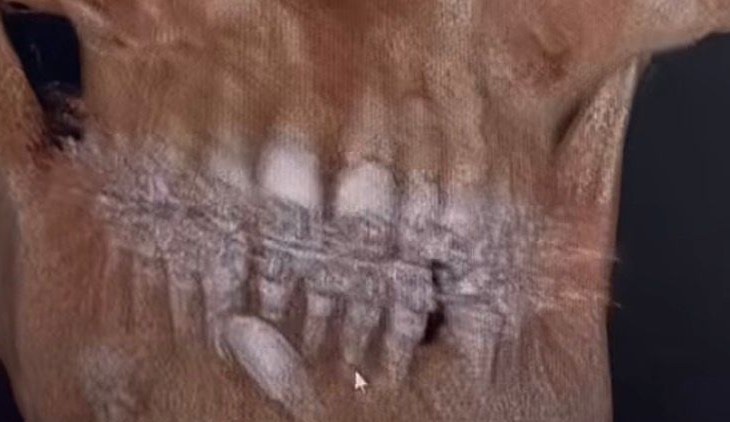
To keep these cases moving, we plan a timely surgical exposure with an oral surgeon, then guide the canine into place with helper appliances, such as the Isoglide.
6. Can treating an overbite before braces shorten treatment?
In growing patients with an overbite, yes. We often use a Crossbow (Xbow) bite corrector before full braces or Invisalign. It is fixed in place, so it works without depending on the patient.
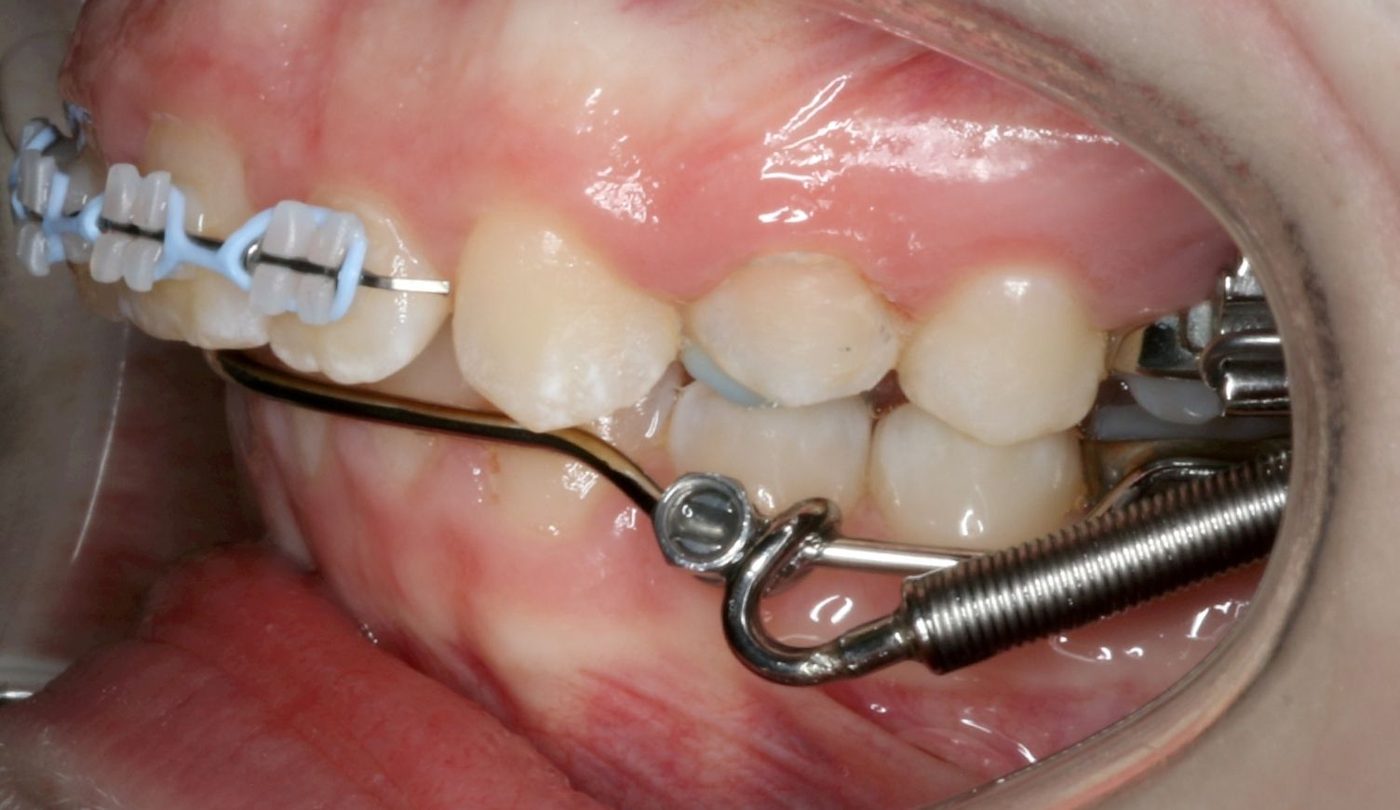
We studied this in our own practice. In a study I co-authored, published in The Angle Orthodontist, we compared 74 consecutively treated patients:5
- Patients who started with the Xbow averaged 24.2 months of total treatment, compared with 30.2 months for patients corrected with a Forsus spring during braces. That’s about 6 months shorter.
- Time in full braces dropped from about 27 months to 17 months.
This was a look back at one practice’s records, not a randomized trial, and results varied from patient to patient.
7. Does early (Phase 1) treatment shorten braces later?
We recommend Phase 1 treatment, usually around ages 7 to 10, for two main problems:
- A narrow upper jaw that needs widening (expansion)
- Teeth blocked out by crowding
For these children, early treatment usually shortens the second, more complete phase and makes the result more stable. The evidence is strongest for widening a narrow upper jaw. A 2021 Cochrane review found high-certainty evidence that expanders correct crossbites in children aged 7 to 11.6 For crowding, a 2015 review found early treatment shortened the later braces phase but made the overall process longer. The authors rated the evidence as limited.7
For an overbite alone, early treatment isn’t automatically better. A 2018 Cochrane review found that early treatment for prominent upper front teeth lowers the risk of injury to those teeth. But the final result was about the same as waiting until the early teen years.8 That’s why we keep Phase 1 for the cases where it clearly helps.
For growing children, we generally prefer braces or other fixed appliances over Invisalign, because growth adds uncertainty. Removable expanders and aligners do work, but results depend on how consistently they’re worn. Fixed appliances let us finish Phase 1 quickly. We then hold the result with a removable retainer worn only at night.
8. Do custom digital braces like Lightforce finish faster?
Lightforce brackets are 3D-printed for each tooth. We place them with digital indirect bonding: we plan every bracket position on a 3D model first, then transfer all of them to the teeth at once. Because each bracket is designed for its tooth, the wire can move teeth with fewer bends and adjustments, and we can often space appointments further apart.
The published studies are encouraging but not yet strong:
- A 2024 study of four private practices found Lightforce treatment took about 30% less time (15–17 months vs. about 24 months) and about 30% fewer visits than conventional brackets. The study was retrospective (a look back at records) and was funded by the company.9
- A 2026 university study of 94 patients with simple to moderate cases found Lightforce averaged 15.9 months, compared with 27.8 months for conventional brackets. It was also retrospective.10
Neither study was a randomized trial. Across more than 500 Lightforce cases, our own experience is that treatment can be 30–50% shorter when things go well. The biggest condition is no broken brackets, along with good elastic wear and kept appointments.
9. Is Invisalign or InSmile faster than braces?
In our hands, braces, Invisalign and InSmile generally finish in about the same time, with some exceptions. The right choice depends on your bite and your habits more than on the calendar.
The research is mixed. A 2019 meta-analysis found aligner cases finished about 6 months sooner than braces. Those were mild, non-extraction cases. In one included study of extraction cases, aligners took 44% longer.11 For a closer comparison, see Braces vs. Invisalign.
Visit schedules differ more than total time. We see most braces patients every 6 to 8 weeks, and more often near the end (every 2 to 4 weeks) to fine-tune the bite. Some Invisalign and InSmile patients only need a visit every 2 to 3 months.
10. Can anything make braces go faster?
Several products and procedures promise faster tooth movement. We sometimes offer a micro-vibration device (AcceleDent), and we have used micro-perforation (tiny openings in the bone around the teeth) in select cases. They seem to help some patients finish sooner, but the science is limited:
- A 2023 Cochrane review found no clear reduction in total treatment time with vibration devices (low-certainty evidence). Light therapies may shorten the first stage of alignment, but that evidence is very low certainty.12
- A Cochrane review of surgical shortcuts such as corticotomy, a larger cousin of micro-perforation, found them promising in the short term. It rated the evidence as low quality and called for longer studies.13
The most reliable ways to finish on time are still the simple ones: clean teeth, kept appointments, intact brackets and worn elastics.
Is treatment over when the braces come off?
Not quite. Retention is a major part of treatment. Teeth tend to drift back, and retainers are what keep the result:
- Our protocol: wear your retainer about 20 hours a day for the first 2 months. After that, wear it during sleep, for life.
- Fast clear retainers: we 3D-print models in our office, so a clear retainer can often be ready quickly, sometimes the same day your braces come off.
- Vivera: Invisalign’s lifetime Vivera retainer program is one we like. When we compared three major clear-retainer brands, Vivera was the most comfortable.
- Memotain: for rotated teeth that are hard to hold, we offer Memotain, custom wire retainers made from a 3D scan.
A 2023 Cochrane review found that no single type of retainer is clearly best; the evidence is very low certainty.14 Long-term studies show why retention matters. Ten years after retainers were stopped, many patients’ lower front teeth had crowded again.15
How to finish on time
Our patients who finish early do the same four things:
- Brush and floss regularly.
- Book the next visit before leaving the office.
- Take care not to break brackets.
- Wear elastics as prescribed.
The bottom line
Most braces treatment takes 1 to 2 years, about 20 months on average in the research. Your bite, your growth and the method we choose set the starting range. How you take care of your braces decides where in that range you finish.
Schedule a complimentary consultation at our Park City or Heber Valley office, and we’ll give you an honest range for your smile.
Sources
- Tsichlaki A, Chin SY, Pandis N, Fleming PS. How long does treatment with fixed orthodontic appliances last? A systematic review. Am J Orthod Dentofacial Orthop. 2016;149(3):308-318. Read the paper
- Jung MH. Factors influencing treatment efficiency: A prospective cohort study. Angle Orthod. 2021;91(1):1-8. Read the paper
- Fleming PS, Scott P, Heidari N, DiBiase AT. Influence of radiographic position of ectopic canines on the duration of orthodontic treatment. Angle Orthod. 2009;79(3):442-446. Read the paper
- Vasović D, Pajević T, Vučić L, Glišić B, Juloski J. Factors influencing treatment duration of impacted maxillary canines. Angle Orthod. 2025;95(3):266-273. Read the paper
- Miller RA, Tieu L, Flores-Mir C. Incisor inclination changes produced by two compliance-free Class II correction protocols for the treatment of mild to moderate Class II malocclusions. Angle Orthod. 2013;83(3):431-436. Read the paper
- Ugolini A, Agostino P, Silvestrini-Biavati A, Harrison JE, Batista KBSL. Orthodontic treatment for posterior crossbites. Cochrane Database Syst Rev. 2021;12:CD000979. Read the review
- Lopes Filho H, Maia LH, Lau TCL, de Souza MMG, Maia LC. Early vs late orthodontic treatment of tooth crowding by first premolar extraction: A systematic review. Angle Orthod. 2015;85(3):510-517. Read the paper
- Batista KBSL, Thiruvenkatachari B, Harrison JE, O’Brien KD. Orthodontic treatment for prominent upper front teeth (Class II malocclusion) in children and adolescents. Cochrane Database Syst Rev. 2018;3:CD003452. Read the review
- Wheeler TT, Garvan CS, Waldman A, Ford J. Clinical efficiency of LightForce 3D-printed custom brackets in diverse practice settings. J Clin Orthod. May 2024. Read the paper
- Hamiduddin A, Aszkler R, Warunek S, Tanberg W, Al-Jewair T. Treatment outcomes of 3D-printed custom brackets and clear aligners in adolescents and young adults with simple to moderate malocclusions: A retrospective study. Int Orthod. 2026;24(2S):101140. Read the paper
- Ke Y, Zhu Y, Zhu M. A comparison of treatment effectiveness between clear aligner and fixed appliance therapies. BMC Oral Health. 2019;19:24. Read the paper
- El-Angbawi A, McIntyre GT, Fleming PS, Bearn DR. Non-surgical adjunctive interventions for accelerating tooth movement in patients undergoing orthodontic treatment. Cochrane Database Syst Rev. 2023;6:CD010887. Read the review
- Fleming PS, Fedorowicz Z, Johal A, El-Angbawi A, Pandis N. Surgical adjunctive procedures for accelerating orthodontic treatment. Cochrane Database Syst Rev. 2015;6:CD010572. Read the review
- Martin C, Littlewood SJ, Millett DT, et al. Retention procedures for stabilising tooth position after treatment with orthodontic braces. Cochrane Database Syst Rev. 2023;5:CD002283. Read the review
- Riedel RA, Little RM, Bui TD. Mandibular incisor extraction: postretention evaluation of stability and relapse. Angle Orthod. 1992;62(2):103-116. Read the paper